Study in Australia

Study in Australia for Indian Students
Study in Australia
Why Study in Australia?
Australia is one of the world’s top study destinations for international students
Australia is recognized worldwide as a premier education destination, celebrated for its high-quality academic framework and forward-thinking policies. With more than 1,100 institutions offering over 22,000 courses designed for international students, it’s regarded as one of the best places to live. All major Australian cities rank among the top 100 student cities globally. Students frequently express high levels of satisfaction, noting that the locals are welcoming, friendly, and warm, making the experience of studying in Australia feel like discovering a second home.
World Class Education
Schools and employers all over the world recognize degrees from Australian schools. Graduates from Australian schools are highly sought after due to the impressive international reputation of the Australian education system. The Australian government carefully regulates this system in order to maintain the high standards of education associated with the country.
Globally recognised qualifications
Your Australian qualification can open up global career opportunities.
Graduates of Australian courses are in demand. Employers in Australia and worldwide know that Australian qualifications are current, industry-relevant and of a world-class standard.
Quick Facts
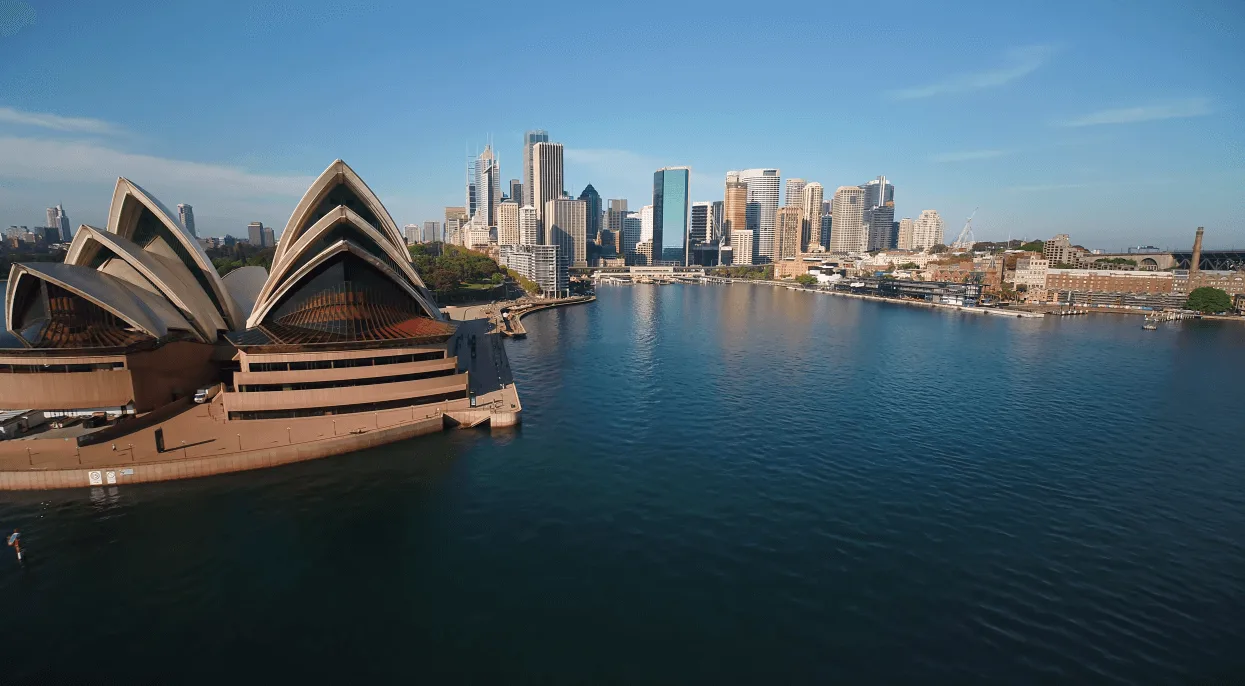
- Canberra is the Capital of Australia
- Australia contains six states—New South Wales, Victoria, Queensland, Western Australia, South Australia, and Tasmania
- Popular cities of Australia are Melbourne, Sydney, Gold Coast, Brisbane, Perth, Adelaide, Canberra, Darwin, Hobart and Cairns.
- Australia is home to 42 universities, with 37 public Australian, three private Australian and two private international universities
- 9 of World’s Top 100 Universities
- 5 out of 30 Best Student Cities in the world are in Australia (QS Best Student Cities 2024)
- Australian Universities have Produced 15 Nobel Laureates
Cost of Studying in Australia
Financial capacity requirements after 10th May 2024.
These are the amounts the Australian government requires you to show, and the fees it charges. They are not our charges — we do not receive any part of them.
| Type of expense | Detail | Expenses in AUD |
|---|---|---|
| Tuition Fees | Tuition Fees for One year (Indicative) 35,000 – 42,000 | 35,000 – 42,000 |
| Living Expenses | Living & Accommodation (Primary Applicant) 29,710 | 29,710 |
| Dependents: Additional 10,394 | 10,394 | |
| Child 4,449 | 4,449 | |
| Airfare (indicative) 2,200 | 2,200 | |
| Visa Charges | Visa application Fees 2,500 | 2,500 |
| Additional Applicant Charge 18+ 1,530 | 1,530 | |
| Additional Applicant Charge U18 500 | 500 |
Costs: the Department of Home Affairs reviews these amounts, so the figures above can change between intakes. Ask us for the current requirement before you plan your funds — we will confirm it with you.
Ask us about Australia costsEntry routes
Getting in — after Class 12, or after your degree
There is more than one way in, and the direct route is not the only one. Which fits you depends on your Class 12 or degree marks, your English score and how soon you want to start. If your IELTS band is lower than a university asks for, that changes which route you take rather than ruling you out — and IELTS is not the only test Australia accepts. Tuition shown is the indicative annual range across the Australian courses we currently work with.
-
Direct entry to a bachelor’s degree
Straight into first year at an Australian university. Suits students whose Year 12 marks and English score already meet the university’s own published cut-off.
Indicative tuition A$22,000 – 39,600 a year
-
Diploma first, then straight into second year
A one-year diploma at a college attached to the university, then entry into the second year of the degree — so it usually adds no extra time overall. This is the route for a student whose Class 12 average or English band falls short of direct entry, and it is the single largest group of courses we place students on.
Indicative tuition A$25,100 – 42,950 a year
-
Direct entry to a master’s degree
Postgraduate study for graduates who meet the university’s entry requirement on their bachelor’s results and English score.
Indicative tuition A$22,870 – 55,193 a year
-
Masters qualifying program
A short qualifying stage for graduates who do not yet meet direct postgraduate entry, taken before the master’s itself. Usually the cheapest stage of any route.
Indicative tuition A$16,200 – 16,900
Entry requirements are set by each institution, not by us, and they differ by course and by examining board — two students with the same percentage can have different options. Pathway programs generally start around 50–60% in your best four Year 12 subjects with IELTS 5.5–6.0, but send us your marksheets and we will tell you exactly which routes are open to you.
Check which route fits youApproved English language tests
The Australian Government’s Department of Home Affairs accepts scores from the following tests, undertaken at a secure test centre, for English language visa requirements:
-
Cambridge English (CAE) (also known as C1 Advanced)
-
Occupational English Test (OET)
Popular Courses in Australia
-

Business & Management
-

Engineering & Built Environment
-

Computer Science & Information Technology
-

Health & Nursing
-

Sciences
Step by step
How to apply to study in Australia
Australia runs three intakes a year, so there is no single deadline — you work backwards from the one you are aiming at. Allow eight to twelve months from first conversation to boarding the plane; the visa stage alone is the part nobody can hurry.
-
Pick your intake and work back from it
February is the main intake and July the second; November is small and offers only selected courses. Start eight to twelve months ahead of the one you want, because every stage below has to fit before it.
-
Match the course to your actual profile
Your Year 12 or degree marks, your budget and the city decide the realistic shortlist — not a rankings table. This is the stage where a pathway route is chosen if your marks or English fall short of direct entry.
-
Sit IELTS or PTE
Book the test early enough to retake it once if you need to. If your band is short of the direct-entry requirement, that does not end the application — it changes which route you take.
-
Assemble the file
Academic transcripts and certificates, passport, English score report, a statement of purpose, letters of recommendation where the course asks for them, and evidence of funds. Transcripts and attestations are the slowest items to obtain, so start them first.
-
Apply, and accept the offer
Applications go to several institutions rather than one. An offer is usually conditional; you meet the conditions, accept it and pay the deposit, and the institution then issues the Confirmation of Enrolment (CoE) that the visa application is built on.
-
Apply for the Subclass 500 student visa
The CoE, your Overseas Student Health Cover (OSHC) and evidence that you meet the financial capacity requirement go in together, along with your Genuine Student statement explaining why this course, this country and what you intend afterwards.
-
Arrange money, housing and the flight
Tuition deposit, an education loan if you are using one, accommodation for at least the first few weeks, and forex. None of this can start before the visa is decided, and all of it takes longer than students expect.
-
Pre-departure
What to carry in hand baggage, what your work rights are once you land, how to open a bank account and get a tax file number, and who to contact in the first week.
FAQs
Studying in Australia — your questions answered
Can I Work while I study?
The Australian international student visa (subclass 500) allows you to work while you study. Look for jobs that offer flexible hours to balance your study and work commitments. You can work up to 48 hours every two weeks while studying and unlimited hours during study breaks.
What Are the Criteria for Available Scholarship?
Australia offers many scholarships for international students. The grant of scholarship is basically on merit and the students have to demonstrate their eligibility for the scholarship they are applying for. There are no qualifying exams for scholarships in Australia. The only exam which the students may have to take is the IELTS to demonstrate their English language ability.
What is the entry requirement in Australia?
You will need to meet a range of entry requirements both for your institution application and your visa application for Australia.
- Academic requirements
- English language requirements
- Evidence of funds to support your study
- Overseas student health cover
Will I be eligible for Post study work visa?
Based on the commitments made under the Australia-India Economic Cooperation and Trade Agreement, Indian students will continue to receive the duration of the Post Study Work Visa.
While Australia has always offered excellent post-study work benefits to international students, the authorities have announced another update that extends work rights for prospective Indian students to up to six years. This is a fantastic opportunity for all Indian students planning to study in this welcoming country, as well as those already pursuing their studies in Australia. Students can study at top-ranked Australian universities and institutions, taking a step toward global career opportunities with the extended post-study work rights offered under Subclass 485.
How many intakes are there in a year?
Australia offers three intakes each year:
- 1 February Intake: This is the main intake, featuring a wide range of programs across universities.
- 2 July Intake: Another major intake, offering the majority of available programs.
- 3 November Intake: This is a minor intake and the least popular, with only select programs available.
From the blog
More on studying in Australia
Study in Australia
What would be an effective way to improve integrity in international education in Australia?
Read more

Study in Australia