Study in Ireland for Indian Students
Study in Ireland
Why Choose Ireland for Education?
Ireland is an excellent destination for international students, offering a friendly and safe environment in an English-speaking country.
World Class Education
Home to world-class universities, it provides high-quality education with internationally recognized qualifications and a wide range of courses. Additionally, students have the opportunity to apply for indefinite stay, similar to permanent residency, making Ireland an attractive choice for those looking to build a long-term future.
Careers, cost and post-study work
The country is also a hub for global IT and pharmaceutical companies, enhancing career opportunities. Ireland stands out for its affordable tuition fees and accommodation compared to other English-speaking nations. A key advantage is the one-year duration for master’s programs and generous post-study work visas—two years for master’s graduates and one year for bachelor’s (Hons) graduates.
Quick Facts
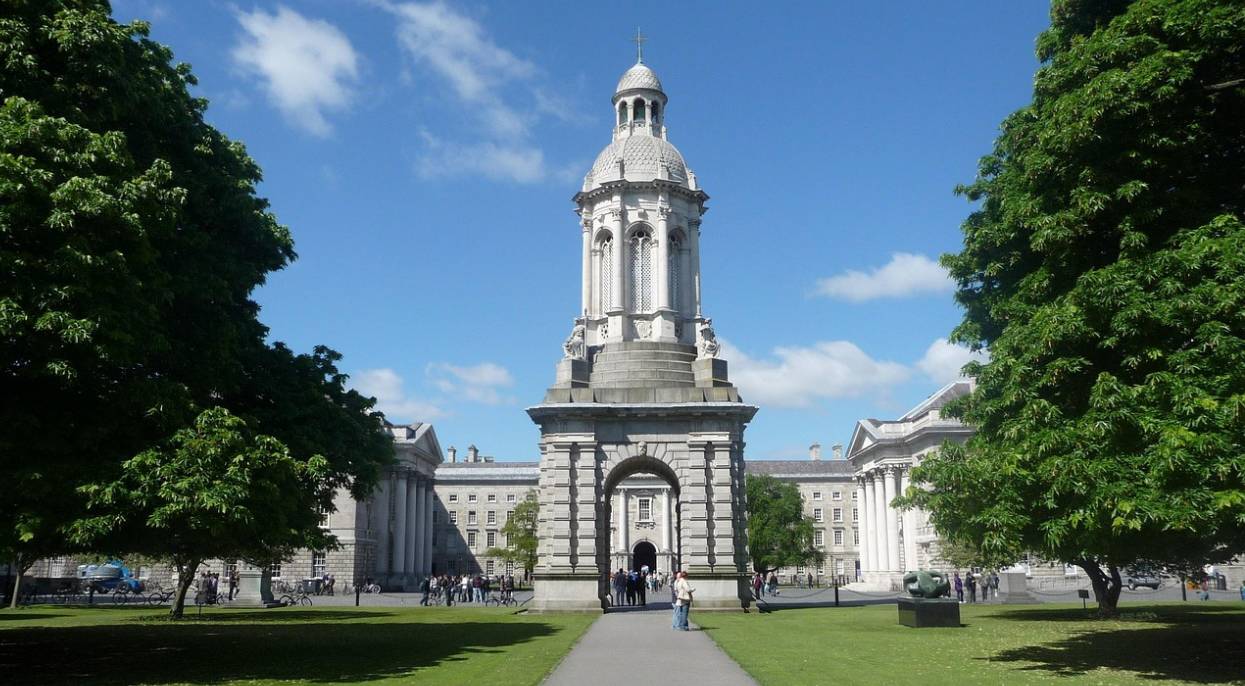
- The capital of Ireland is Dublin.
- Ireland is located in the north-west of Europe.
- Ireland is the 14th happiest country in the world.
- Popular cities of Ireland are Cork, Galway, Maynooth & Limerick.
- The official languages of Ireland are Irish and English.
- Population of Ireland is approximately 49 lakhs, and the urban population of Dublin is approximately 14 lakhs.
- Currency of Ireland is Euro €.
- Ireland is home to the headquarters of many multinational companies like Google, Facebook (Meta), Apple, Microsoft, Twitter, Pfizer, Dell Technologies, Amazon, LinkedIn, Airbnb.
Scholarships in Irish Universities
Innumerable scholarships and student grants are available for international students in Ireland from various sources such as:
-
The Government of Ireland
-
Irish Higher Education institutions
-
Other organizations
The government, educational institutions and the organizations set down their own eligibility criteria.
Scholarships are awarded for undergraduate, postgraduate or research students and for various fields of study.
Cost of Studying in Ireland
The student must show funds for the entire study and stay duration in liquid assets like an education loan, bank balance, or fixed deposits.
These are what Irish universities charge and what you will need to be able to show. None of them is our fee — we do not receive any part of them. The tuition ranges are the same for undergraduate and postgraduate programmes.
| Type of expenses | Detail | Estimated cost |
|---|---|---|
| Tuition fees | Public university €14,000 – €21,000 | €14,000 – €21,000 |
| Private university €12,000 – €14,000 | €12,000 – €14,000 | |
| IOTs €10,000 – €12,500 | €10,000 – €12,500 | |
| Living cost | Undergraduate and postgraduate €12,000 | €12,000 |
Costs: Irish universities set their own fees and revise them by intake, and what you have to show moves with them, so a figure that is right for one September can be wrong for the next. Tell us the course and the intake you are aiming at and we will confirm what you will actually need.
Ask us about Ireland costsApproved English language tests
-
Duolingo English Test
Popular Courses in Ireland
-
Data Analytics
-

Cybersecurity
-

Mechanical Engineering
-

Biopharmaceutical Engineering
-

Artificial Intelligence
-
Nursing (Advanced Practice)
These programs provide strong career opportunities in high-demand sectors in Ireland. They include roles in sectors such as Information Technology, Engineering, Healthcare, Science, Pharmaceuticals, and Finance, with positions like software engineers, civil engineers, medical professionals, and accountants often featured.
Step by step
How to apply to study in Ireland
Ireland runs two intakes — a large one in September and a smaller one in January that not every course offers — so there is no single deadline; you work backwards from the one you are aiming at. Allow eight to twelve months from first conversation to boarding the plane, and start earlier if January is the target, because the choice of courses there is narrower and fills faster.
-
Pick your intake and work back from it
September is the major intake and carries most of the places, so a plan built around it has the most to choose from. January exists at many universities but not for every program, which is the detail that catches people out — a course you have set your heart on may simply not run then. Fix the intake first; every deadline below is counted back from it.
-
Shortlist courses, and check how long they actually run
Most taught master’s in Ireland are one year rather than two, which changes the whole calculation — one year of tuition, one year of living costs, and you are working a year sooner. It is not universal, so confirm the duration on the programme page for every course on your list before you compare their fees, because a cheap two-year course is not cheaper.
-
Get your documents in order before you need them
Transcripts, mark sheets, degree certificates, passport, and letters of recommendation and a statement of purpose where the course asks for them. This is the errand that quietly costs the most time, because anything that has to be reissued by a university or a passport office runs on somebody else’s calendar rather than yours.
-
Sit the English test your course asks for
Irish universities accept IELTS, TOEFL, PTE Academic and the Duolingo English Test, but not every course accepts all four and the score each wants differs. Confirm which on the programme page before you book anything, and leave enough room in the calendar to retake one of them once — that single spare attempt is what keeps a low score from costing an intake.
-
Apply, by whichever route your courses use
Some Irish courses take applications on the university’s own portal and some go through a shared applications centre, and which one applies depends on the course rather than the institution — so a shortlist of five can easily need both. Each has its own deadline and its own document list. Working out which route each of your choices uses is one of the first things we will do with you.
-
Accept your offer, and assemble the money evidence
Offers are often conditional, so read what you still have to satisfy and by when. Then comes the money, and it is the part the cost table above is really about: you have to show funds for the whole of your study and stay, held in liquid assets — an education loan, a bank balance or fixed deposits. Money tied up in property, or held in somebody else’s name, will not answer that, so start the paperwork the moment the offer lands.
-
Apply for the study visa
The application goes in with your letter of acceptance, the evidence of funds, private medical insurance and your English certificate. Appointment slots and processing are the real constraint in peak season rather than the university’s deadline, so the date you can get is usually what fixes the rest of your timetable. Book flights after the decision, not before it.
-
Pre-departure, and the first few weeks
What to carry in hand baggage, and the paperwork that only starts once you land: registering with immigration, applying for a PPS number so you can be paid and taxed, opening a bank account and enrolling in person. Sort accommodation for at least the first month before you fly — Dublin in September is the hardest rental market in the country, and arriving without a room is the one avoidable crisis.
FAQs
Studying in Ireland — your questions answered
What is the Critically Required Skills List in Ireland?
The Critically Required Skills List in Ireland is a list of occupations that are in high demand and crucial to the country’s economy. The list is used to guide the issuance of the Critical Skills Employment Permit, which allows foreign nationals with the necessary qualifications and expertise to work in Ireland. This permit also provides a pathway to permanent residency after two years of employment in a critically skilled role, helping to fill skill gaps in Ireland’s labour market.
How many intakes are there in Ireland?
There are mainly two intakes in a year: September and January. September is the major intake for all universities. Few universities might not have January intake for few of their programs. It is advised to check the university website for more details on the intake.
What are the part-time work rights for international students in Ireland?
Students can work on campus and off campus 20 hours per week during studies and 40 hours per week during the vacation.
What is PPS?
In Ireland, the PPS (Personal Public Service) number is a unique identifier assigned to individuals to access a wide range of public services and benefits. It is used for various purposes, including taxation, social welfare, healthcare, and employment.
What is the average part-time work salary in Ireland?
Average part-time salary is €12–€16 per hour.
+91 9720510000